Koozeh-Shekani: Where tradition, belief and renewal converge
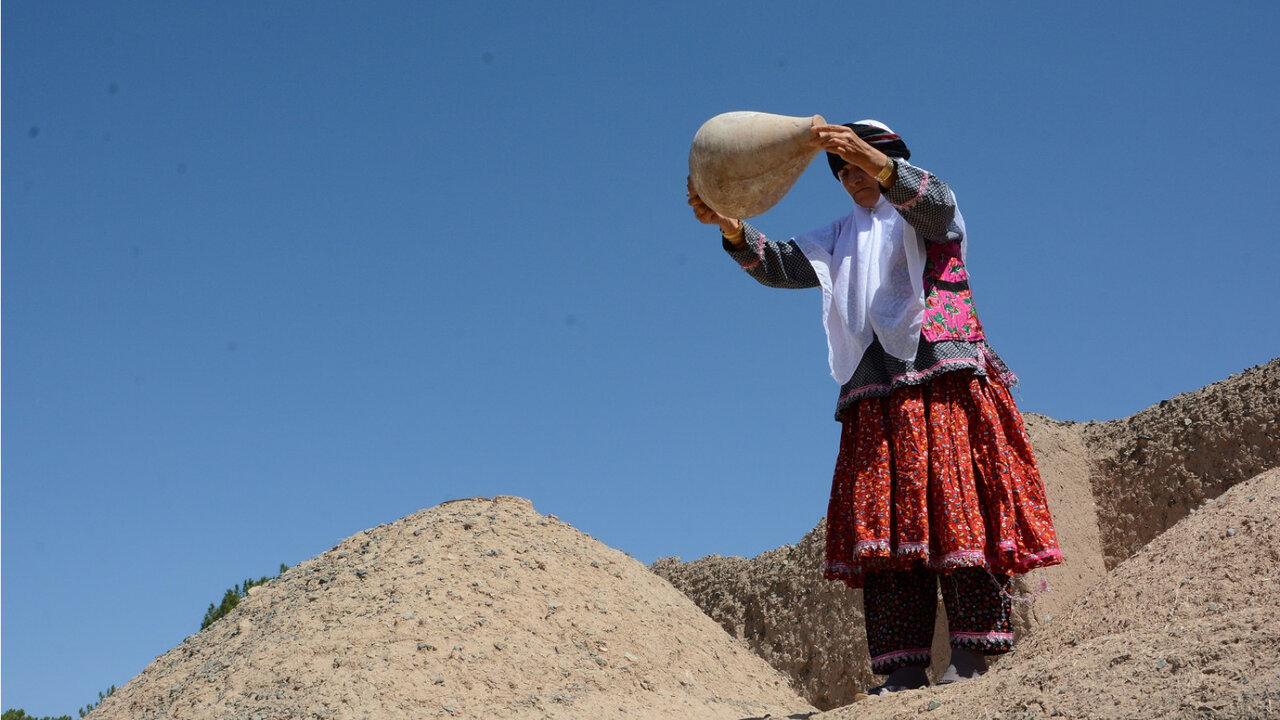
TEHRAN - The Koozeh-Shekani ceremony is one of the nearly forgotten traditions observed on the eve of the last Wednesday of the Iranian calendar year, coinciding with Charshanbe Suri, in some villages and towns of South Khorasan province in eastern Iran.
Alongside customs such as jumping over bonfires (locally known as Tousho) and the celebration of the Dehqan (peasant) festival, Koozeh-Shekani was once widely practiced in the region.
Symbolically, Koozeh-Shekani closely resembles the spirit of Nowruz (the Persian New Year), as it represents the replacement of the old with the new, the transition from the past to the present, and the passage from hardship to prosperity.
In earlier times, it was customary in many parts of South Khorasan for people to break old pots and jars on the last Wednesday of the year. These vessels were typically those that no longer kept water cool or had developed algae inside, turning their interiors green. Some families placed symbolic items inside the pots: charcoal to represent misfortune, coins to signify prosperity and livelihood, and salt as a symbol of sharp vision and insight. Before the pot was broken, it was rotated over the heads of all family members. It was then handed to the woman of the household, who would climb to the rooftop and throw it down into the alley, shattering it. In some cases, staple crops of the season--such as barley, wheat, or beans--were added so that, after the pot broke, the grains would serve as food for birds.
The ceremony followed a specific ritual. On Wednesday evening, families brought firewood to the rooftop and filled the pot with water. A portion of the water was then poured into the four corners of the rooftop, after which the pot was thrown down from the roof and broken. At the moment of breaking the pot, participants recited verses such as:
My pain and affliction are poured into the pot (koozeh),
May the pain and affliction of the pot be cast into the narrow alley (koocheh).
This verse is a deliberate play on words, as koozeh means “pot” and koocheh means “narrow alley.”
Another commonly recited couplet was:
Go sorrow, come joy;
Go hardship, come sustenance.
The ritual is rooted in the belief that by breaking the pot and discarding the misfortune symbolically placed within it, happiness and blessings would enter the household. A practical reason for the custom was the widespread use of unglazed earthenware pots for drinking water and storing food. People believed that using such pots for more than a year could lead to unhygienic conditions, as impurities would be absorbed into the pot’s walls and potentially cause illness.
Some researchers suggest that Koozeh-Shekani contributed to the flourishing of pottery in South Khorasan. Since pottery played an essential role in daily life, the breaking of old vessels created a constant demand for new ones used for storing food and water.
At the conclusion of the ceremony, families filled their new, clean pots with fresh water from the qanat springs and joyfully carried them home, placing them on the Haft-Seen table prepared for Nowruz celebrations.
According to oral tradition, Koozeh-Shekani dates back to the Qajar era, when a romantic dimension was added to the ritual. Families with a marriageable daughter would tie a handkerchief to the handle of the pot and give it to the girl to throw from the rooftop into the alley. If a young man admired her, he would retrieve the handkerchief and later present it during a formal marriage proposal. A few days afterward, the suitor would visit the girl’s family with the handkerchief, a box of sweets, and a new pot, accompanied by his relatives. Although the primary purpose of the ritual was to promote hygienic practices, this romantic element made Koozeh-Shekani more appealing to people of that period.
Koozeh-Shekani was officially registered on Iran’s List of Intangible Cultural Heritage in 2002.
AM
Leave a Comment